





DHA eNews - USITC Rules That Hardwood Plywood Manufacturers Have Been Harmed By Imports
Congratulations to the Coalition for Fair Trade in Hardwood Plywood on its success at the U.S. International Trade Commission. USITC agreed that U.S. manufacturers and workers are harmed by dumped and subsidized plywood from China, Indonesia, and Vietnam. DHA members Columbia Forest Products, Timber Products, States Industries, Manthei Wood Products, and Commonwealth Plywood, the members of the Coalition, provided critical leadership to defend U.S. manufacturers and workers.
On July 16, the U.S. Department of Commerce announced its final affirmative determinations in the antidumping and countervailing duty investigations of hardwood and decorative plywood from China, Indonesia, and Vietnam. Now that the USITC has ruled, Commerce will impose those duties on imports, including 275% on China, 28–213.6% on Indonesia, and 132.63–250.34% on Vietnam. The next challenge will be to prevent transshipment, which the Trump administration already recognizes as a serious problem.
If you have questions or comments, contact me. I look forward to hearing from you.

Keith A. Christman, President
PHOTO © COLUMBIA FOREST PRODUCTS
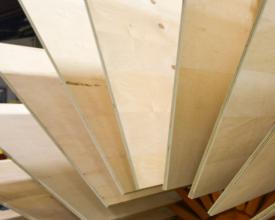
On August 19, the U.S. International Trade Commission (USITC) determined that U.S. industry has been materially injured by imports of hardwood plywood from China, Indonesia, and Vietnam. The U.S. Department of Commerce found that the imports are being sold in the U.S. at less than fair value and subsidized by their governments. As a result, Commerce will impose antidumping and countervailing duties.
On July 31, Canada imposed a provisional tariff of 25% on imports of wood cabinets and vanities while the Canadian International Trade Tribunal conducts an inquiry. The tariff addresses immediate challenges facing Canadian manufacturers, including increased imports being diverted to Canada as global trade patterns shift, and helps stabilize the Canadian market and support domestic manufacturers. Cabinets manufactured in the U.S. are excluded from the tariffs.
On August 14, the American National Standards Institute (ANSI) officially reaccredited the Hardwood Plywood and Veneer Association under its revised procedures for developing American National Standards. DHA develops consensus standards for hardwood plywood, engineered wood flooring, and legal timber due diligence under the HPVA brand.
The U.S. Office of Management and Budget declared its support for the Fix Our Forests Act, citing the bill's strong alignment with federal priorities to expand active forest management, expedite environmental reviews, reduce frivolous litigation, and improve wildfire resilience through coordinated federal, state, tribal, and local action.
The U.S. Senate passed a continuing resolution to keep federal government operations running through December 11. The House-passed measure extends funding through December 4. Congress will need to reconcile the difference when it returns in September.
The chair of the House Committee on Agriculture said he is concerned about the future of the U.S. hardwood industry and the impact on rural communities. He warned that losing sawmills would reduce forest management capacity and create unacceptable consequences for rural America, and highlighted several opportunities to support the hardwood industry, including federal procurement policies and expanded exports.
A White House report identified more than 40 jurisdictions, including the EU, Canada, Japan, and Brazil, as associated with a higher risk for illegal transshipments. The report warned that those attempting to evade U.S. tariffs through illegal transshipment will be caught and penalized, and promised that those who cooperate with the U.S. to fight tariff evasion will be treated as allies in restoring fair trade.
Late on August 18, President Trump announced a pause on the 50% tariffs on products from Canada that included hardwood plywood and softwood veneer. The new tariffs, targeting dozens of products, were set to go into effect at 12:01 a.m. ET on Wednesday, August 19. Trump stated that he would pause the tariffs for three days, citing a upcoming deal between the U.S. and Canada.
Declines in the volume of U.S. hardwood plywood imports have been driven by Indonesia and Vietnam, down by nearly 74% and 67%, respectively, likely due to high preliminary antidumping and countervailing duties. Imports from Cambodia have shot up by 585% and imports from Malaysia climbed by 195%, suggesting potential transshipment to evade tariffs.
The Kitchen Cabinet Manufacturers Association reports that the volume of U.S. cabinet sales increased in June, up by 13.1% over May. However, year-to-date sales are still down by 10.7%.
Eagle Woodworking surveyed 500 U.S. construction and trades professionals, a mix of contractors, tradespeople, project managers, and builders, to understand where the skilled-labor shortage is hitting hardest and what it's doing to the work. At the top of the list are carpenters and woodworkers. The consequence is a decline in the quality of the work.
NAHB has outlined the key provisions in the new 21st Century ROAD to Housing Act, which directs the Department of Housing and Urban Development to create voluntary federal guidelines for state and local zoning best practices. While not mandatory, the guidelines will help shape how communities are evaluated for federal grants and give states a model for developing their own legislation.
Capital Testing's ISO-accredited Legal Timber Due Diligence certification program helps companies strengthen their due diligence programs, comply with legal timber requirements, and demonstrate their commitment to using legal timber. Certifying to the LTDD standard helps build customer confidence while reducing companies' legal and financial risks.
Invasive insects, drought, and disease are the "stacked stressors" killing Wisconsin's oak trees. Many oak trees are declining or dying because of spongy moth infestations and drought. Tornadoes and violent storms have compounded the problem, damaging thousands of trees and making them more vulnerable to deadly oak wilt.
A recent article in Mother Jones notes that the northern spotted owl is in trouble again, despite years of federal protection that have come at a high cost to the Northwest timber industry and workers. Now, federal officials are considering killing barred owls, which are outcompeting the spotted owls. Expect infighting and strange bedfellows in this debate.
How long did it take ancient forests to recover from the last period of global warming?